How to Dry Laundry Indoors in Winter Without Damp Taking Over
Wet washing, closed windows and a home that never quite dries out — here is how to get laundry dry indoors through a British winter without inviting mould in.

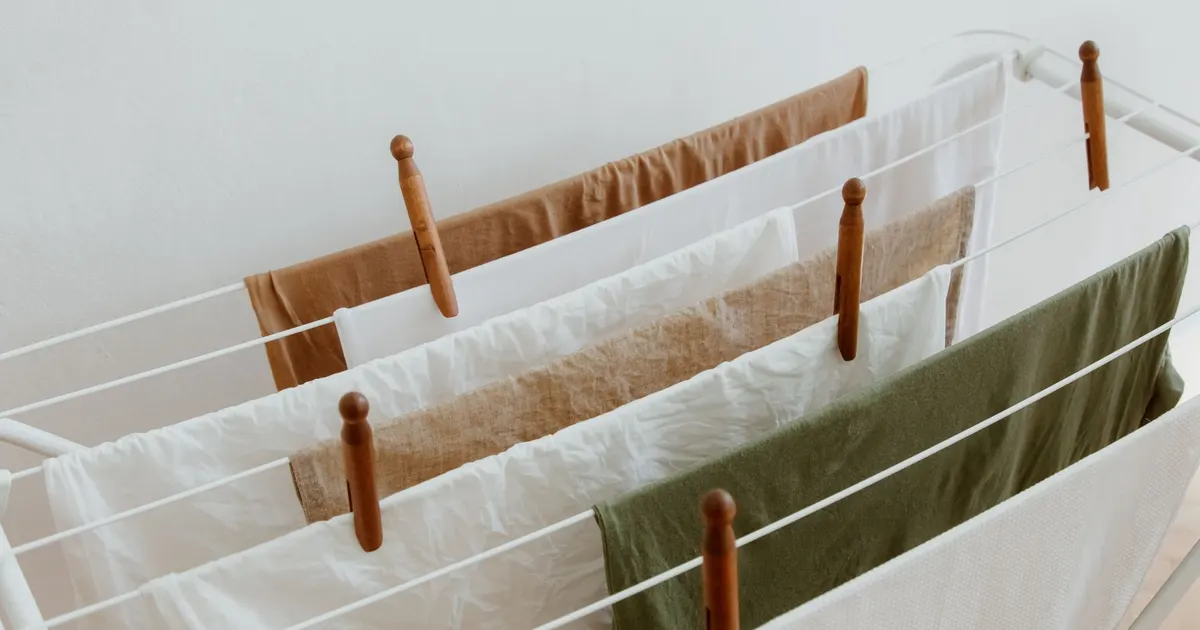
Why indoor drying causes so much trouble here
British winters are a perfect storm for wet washing. The heating goes on, the windows stay shut, and weeks of rain put the line out of action. A Victorian terrace with a draughty sash window in one room and a blocked trickle vent in another has no way of shifting moisture as fast as a busy household adds it.
A full load of washing holds several litres of water. That water has to go somewhere. It rises into the air as steam, then settles on the coldest surface it can find: a bedroom window, an outside wall, the back of a wardrobe. Dry two or three loads a week indoors from October through to March and those surfaces never really get a chance to dry out. That is when the musty smell starts, and when the black speckling appears along the sealant in the bathroom.
The good news is that you rarely need much kit to fix it. You need airflow, a bit of warmth in the right place, and an honest plan for where wet laundry actually lives in your home.
Work out where the moisture is going
Before buying anything, spend a week watching your own flat or house.
- Which windows stream up first? That is your coldest surface, and the room that needs the most attention.
- Does the smell sit in one cupboard or one corner, or is it everywhere? One bad corner usually means blocked airflow behind furniture rather than a whole-house problem.
- Does the bathroom extractor actually pull? Hold a sheet of toilet paper near the grille. If it will not hold, the fan is not doing its job.
- Are the trickle vents above the windows open? Plenty of people close them to keep the heat in, then wonder why the walls are wet.
That week of notes tells you more than any buying guide, including this one.
The three indoor drying options, compared honestly
Heated airers
Best for one or two loads at a time in a small room. The warmth speeds drying and the rack folds flat under a bed. What it does not do is remove water from the air. It simply moves moisture from the clothes into the room slightly faster. Pair one with an open window or a dehumidifier, or you are rearranging the problem rather than solving it.
A trick worth trying: drape a clean sheet over the airer and the clothes. It traps the warm air around the laundry and can cut drying time noticeably. Leave a gap at the bottom so cooler air can still get in.
Dehumidifiers
The most reliable option for a British winter, and the one most people end up keeping. Desiccant models keep working well in a cold spare room. Compressor models are more efficient in a warm, heated space, so match the type to the room rather than to the label.
Placement matters more than size. Put the unit beside the airer, not across the room, and shut the door so you are drying one small space rather than the whole house. If the tank fills overnight, a hose to a drain is worth the faff. Look for a humidistat and a laundry setting, and check the noise figure if the machine will run near a bedroom.
Tumble dryers
If you have the space, a vent or a suitable outside wall, a tumble dryer ends the argument. Heat-pump models run cooler and are kinder to clothes, but they still need a decent gap around them and the fluff filter emptied far more often than most people bother to. In a flat with no outside wall, a condenser model means emptying a water drawer every cycle. Fine, but it is a chore you will be doing for years.
Airflow beats heat, every time
The single biggest mistake is packing clothes tightly onto a rack. Garments need air moving over the surface, not just around them.
Space items a hand's width apart and rotate them once or twice. Hang shirts on hangers from the top bar rather than folding them over a rung. Point a small fan at the airer on its lowest setting, because moving air dries clothes faster than a warm room with still air. And open the door to the rest of the house only once drying is nearly finished, so the leftover moisture has somewhere to go.
A room-by-room plan
The bathroom
Fine for a lightly spun shirt, terrible for a full load. Steam from showers plus wet washing is too much for most extractor fans. If you must, run the fan throughout and for a good while afterwards, and keep the door shut so moisture does not migrate into the hall and bedrooms.
The spare room or landing
The classic choice, and the one that quietly causes the most damage, because that is where bedding and spare towels live. Use it, but keep the door shut, crack a window briefly, and run a dehumidifier at the same time. Check behind the bed and inside the wardrobe every few weeks.
The kitchen
Only for small items, and never while you are cooking. Boiling pasta and drying socks in the same room is a losing battle. Use the extractor hood every time you cook, and put lids on pans. That alone cuts a surprising amount of indoor moisture.
Build a routine that survives a wet week
- Spin washing as fast as the fabric allows. The more water the machine removes, the less ends up in your air.
- Wash earlier in the day so the bulk of drying happens while the heating is on rather than overnight.
- Dry one load at a time. Two racks of washing in one room slow each other down and leave the room damper for longer.
- Give everything a final ten minutes somewhere warm and airy before it goes in the wardrobe. Damp clothes folded away are how musty smells start.
- Air the whole home for a short burst each morning, even in January. Ten minutes with the windows open and the heating off loses far less heat than you would think.
What to look for when you buy
- A tank you can carry without swearing, or a hose outlet you can actually reach.
- A humidistat, so the machine switches itself off instead of running all day.
- A noise figure that suits where it will live. Anything destined for a hallway or a room next to a bedroom needs to be quiet enough to ignore.
- A laundry mode and an adjustable louvre or drying flap.
- Build quality you can check before buying: sturdy feet, a handle that does not flex, and a filter you can remove and rinse in a minute.
What to avoid
- Draping wet washing straight over radiators with no airflow. It dries the outside of the fabric and leaves the middle damp.
- Hanging towels over the tops of doors, where they block the very gap the room needs for air movement.
- Shutting wet laundry in a cupboard or a spare room with the door closed and no dehumidifier running.
- Ignoring a musty smell for weeks. By the time you can smell it clearly, the damp has usually been there a while.
- Running a compressor dehumidifier in an unheated room in the depths of winter and expecting it to perform like it does in September.
The verdict
For most British homes, the winning combination is a simple one: spin the washing hard, hang it loosely on an airer in one closed room, and run a dehumidifier beside it until the clothes are dry. A heated airer helps, and a tumble dryer settles the matter if space allows. Skip the radiator-draping and the tightly packed rack, keep the trickle vents open, and your windows should stop streaming well before the clocks go forward.